Consumer Electronics
Design of ESP-VoCat
How a hard microphone-placement constraint on an AI desktop robot turned into the product's defining feature.
Opportunity Arises from the Toughest Limitations
“Form follows function” is a principle we all know, but what happens when form and function seem to be at odds, staring each other down across the sketchpad?
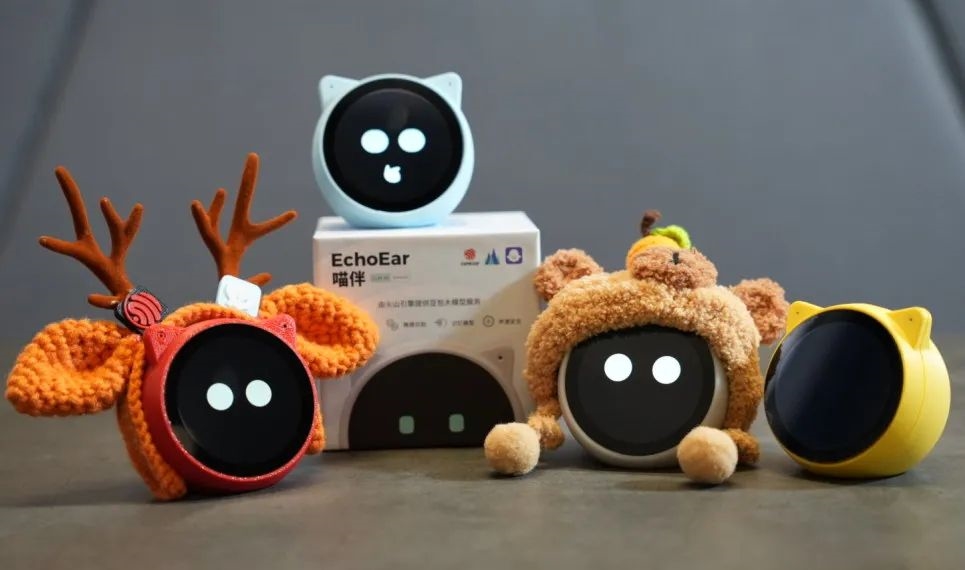
That was our challenge with ESP-VoCat, an AI desktop robot co-developed with Volcano Engine. We envisioned a small, spherical device with a circular LCD. Sleek, minimal, and expressive.
But then came the catch.
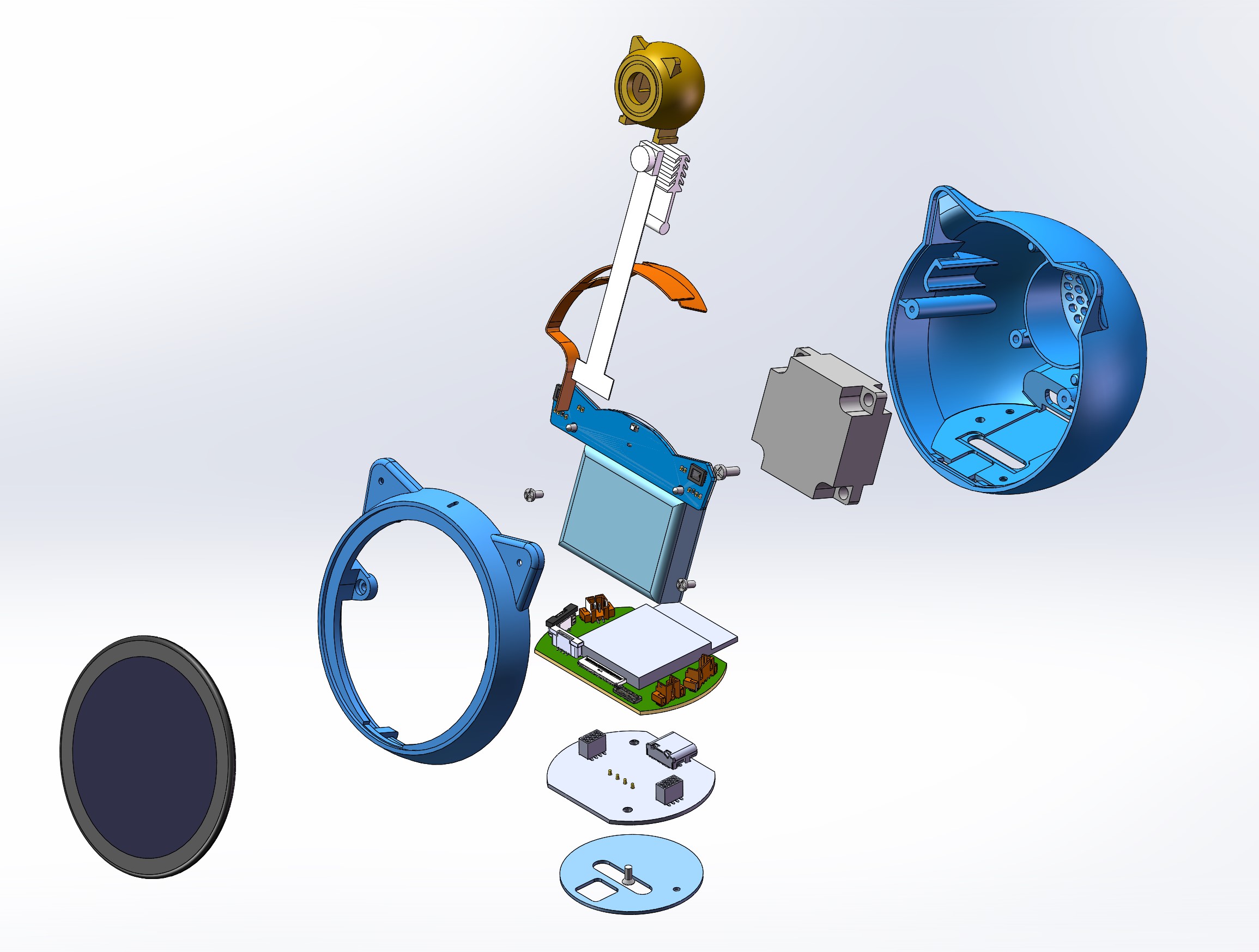
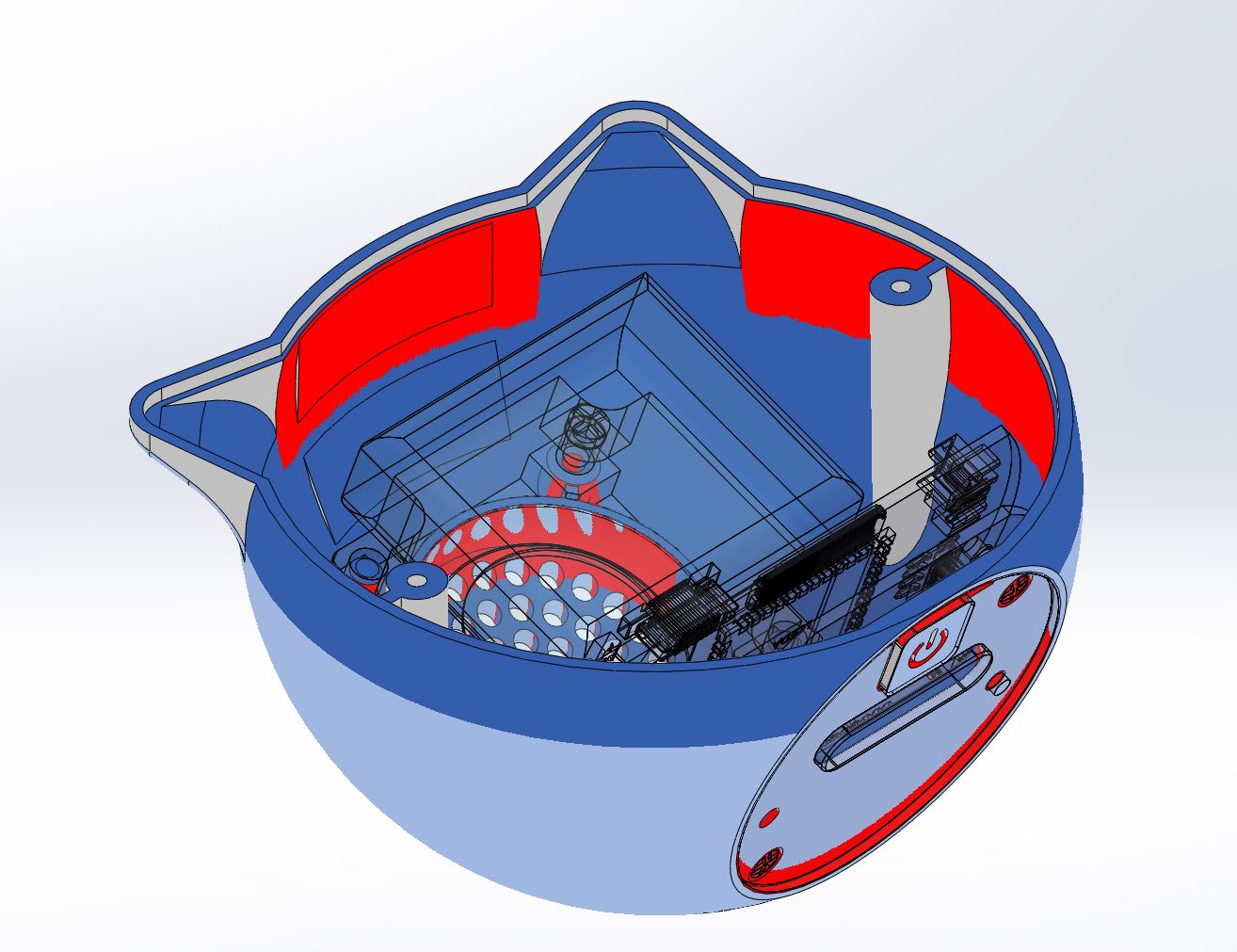
To support beamforming and far-field voice recognition, we needed two microphones spaced at least 4 cm apart. But the face is fully taken up by the LCD panel. As an engineer, the practical answer was obvious — to just let them stick out. Functional, yes. But the form? Compromised. The charm? Gone.
So I switched gears, from engineer to designer.
Rather than fight the constraint, I asked: what if we embraced it? Microphones are for hearing. What hears? Ears. And ears can naturally protrude from a body, especially if that body is a sphere. Maybe even something playful, like cat ears.
Suddenly, the challenge turned into an opportunity.
From Constraint to Character
From this pivot, ESP-VoCat was born. What began as a limitation turned into the product’s defining feature. The dual microphones became “ears” — not just for function, but for identity. They elevated the aesthetic while clearly telegraphing the robot’s auditory capabilities. ESP-VoCat retained its clean, minimal silhouette, but now with a spark of personality and warmth.
In the end, we didn’t settle for form following function, or function following form. We found a way where each elevates the other. Perhaps that is what good design is all about.
Further Reading
More on the design, function and full open source documentation on ESP-VoCat: ESP College - OSHWHUB More on the dual-microphone development approach behind the beamforming setup is available on Espressif’s own dev kits page: Dual Microphone development on Espressif dev kits